If you live for days on the water or plan to buy or sell a waterfront home in Palm Beach Gardens, your dock and seawall matter more than you might think. These structures shape how you boat, what you can safely moor, your long-term costs, and even your property’s marketability. With the right plan, you can enjoy easy access to the Intracoastal while protecting your shoreline and your investment. This guide breaks down the essentials so you can make confident decisions. Let’s dive in.
Why docks and seawalls matter here
Palm Beach Gardens fronts the Intracoastal Waterway and a network of canals with direct boating access. A well-designed dock helps you use your boat safely and conveniently, while a sound seawall protects your upland property from erosion and wakes. For many buyers, these features are must-haves that elevate daily life and resale potential.
If you are buying, the condition and permitting status of a dock or seawall can change your total cost of ownership. Repairs and replacements are often significant expenses and can affect insurance and timing. If you are selling, having clear permits, inspection records, and maintenance history builds buyer confidence and keeps your deal moving.
Beyond usability, these structures carry responsibilities. You will need to consider tides, currents, boatlift capacities, and local rules. Treat your dock and seawall like you would a roof or foundation: essential systems that need proactive care.
Permits and who handles them
Most projects touching the shoreline or submerged lands require permits. In Palm Beach Gardens and greater Palm Beach County, you often work with several layers of agencies. City building and zoning staff handle local codes and inspections. County departments address building requirements and environmental resources.
State and federal agencies may also be involved. The Florida Department of Environmental Protection oversees use of sovereign submerged lands. The South Florida Water Management District reviews dredging and certain water resource impacts. The U.S. Army Corps of Engineers permits work in navigable waters. Reviews can also involve wildlife protections through state and federal partners.
Permit timelines vary. Minor repairs can move in weeks. New docks, seawall replacements, or dredging that touch submerged lands or sensitive habitats can take months. Plan your project timeline with this in mind.
Your permitting game plan
- Start with a pre-application conversation with the City of Palm Beach Gardens building or engineering team and the Palm Beach County Building Division.
- Ask about property-specific constraints like mean high water lines, submerged land ownership, easements, and setbacks.
- If your project involves dredging or a new footprint over submerged lands, confirm whether state and federal permits are required.
- Keep your survey, prior permits, and any as-built drawings handy. These documents save time and reduce surprises.
Dock options and site fit
Fixed vs floating docks
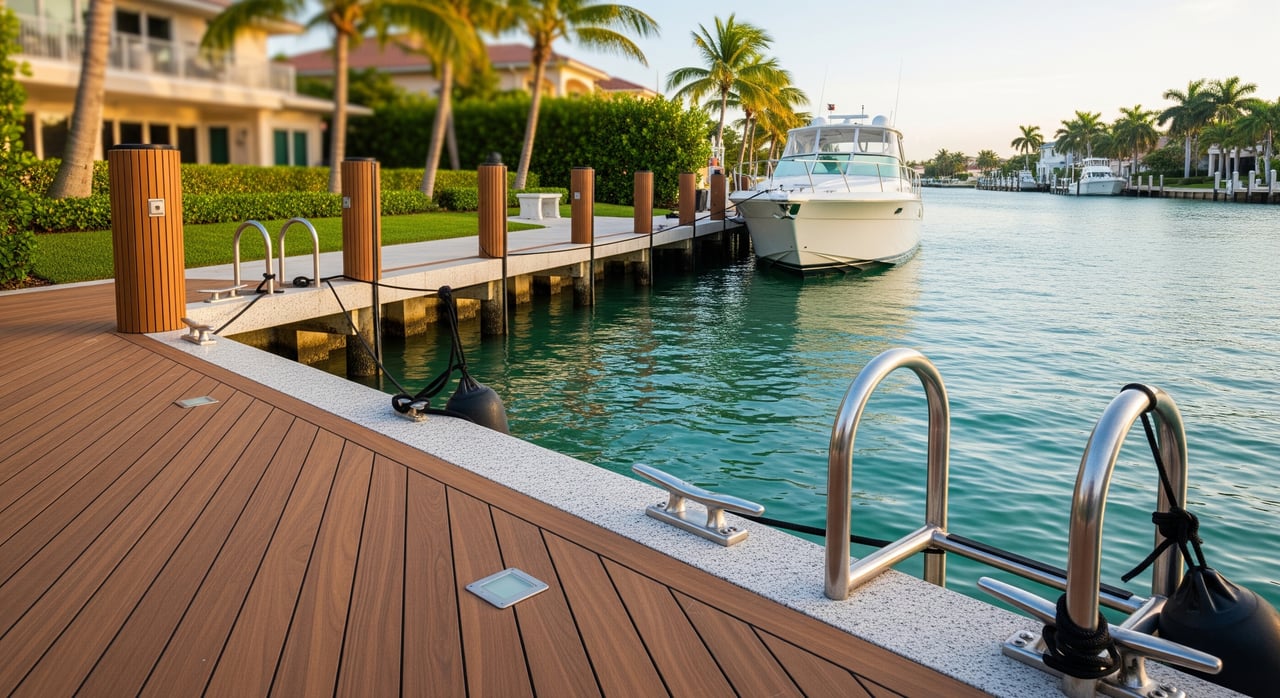
- Fixed pile-supported docks offer stability and support for heavier loads. They are common where larger vessels moor or where consistent elevations help with boarding and utility runs.
- Floating docks rise and fall with the tide, which can improve day-to-day boarding and be more cost-effective in protected canals. In higher-energy locations, fixed docks often perform better.
Materials you will see
- Pressure-treated timber is common and cost-conscious but needs consistent maintenance in saltwater.
- Marine-grade aluminum or composite decking helps resist rot and reduces maintenance needs.
- Steel components offer strength but must be protected against corrosion.
Boat lifts and davits
Boat lifts are a popular upgrade in Palm Beach Gardens canals and along the Intracoastal. Design for your boat’s weight, beam, and clearance. Electrical work often requires separate permits. Confirm the lift’s capacity and your dock’s load-bearing design before upgrading to a larger vessel.
Seawall choices and durability
Seawalls protect against erosion, stabilize the shoreline, and support dock structures. You will see concrete panels, cast-in-place concrete, steel sheet piling, vinyl or composite sheet piling, and some timber bulkheads.
- Concrete and steel systems are durable and common on higher-energy shorelines, but they require proper anchoring and corrosion protection.
- Vinyl and composite panels resist rot. They still need correct design and anchoring to prevent deformation under load.
- Timber bulkheads can be budget-friendly at the start, but saltwater conditions shorten their service life without frequent maintenance.
Subsurface soils affect what works best. A geotechnical evaluation may be needed for replacements so engineers can design tie-backs and anchoring that match your site. The canal or Intracoastal exposure, tidal range, and boat traffic should all inform your choice.
Living shorelines where feasible
In lower-energy areas, living shorelines that use natural materials, native vegetation, or oyster structures can offer erosion control and ecological benefits. They may not suit exposed Intracoastal sites with heavy wakes, but they can be a strong fit in certain tributary areas. Ask permitting staff early if this approach could work on your property.
Boat access, depth, and dredging
Day-to-day boating depends on water depth in your canal or along your shoreline. Shoaling is common. If you need dredging to reach deeper water, expect additional permits and possible coordination with neighbors and navigation authorities.
Dredging and boat basin modifications can trigger state and federal reviews, along with potential mitigation. Start early, as these timelines are longer than simple repairs or in-kind replacements.
Environmental and wildlife considerations
Parts of Palm Beach County include seagrass beds and manatee protection zones. These resources can limit where you place structures and how you schedule in-water work. Some projects may be timed to avoid sensitive seasons.
Lighting and noise also matter near the water. Install lighting that limits uplight and glare. Make sure discharge practices comply with rules that govern sewage and bilge. Respect local speed and wake regulations near your property for safety and shoreline protection.
Inspection and maintenance checklist
A proactive maintenance plan extends the life of both docks and seawalls and reduces risk after storms.
- Inspect after major storms for cracking, leaning, scour at the toe of the wall, and shifting fill behind the wall.
- Check concrete for spalling, rust staining, or exposed reinforcement. Address tie-back corrosion early.
- Examine piles and caps for rot, loosened fasteners, or movement.
- Keep weep holes and drainage paths clear to relieve pressure behind seawalls.
- Clean marine growth and re-caulk joints as needed.
- Document all findings with photos and keep a simple log for insurance and resale.
Lifespan, costs, insurance, and resale
Service life depends on materials, site exposure, installation quality, and maintenance. Concrete and steel systems often last longer when properly designed for marine conditions. Timber requires more frequent attention in saltwater. For a meaningful estimate, hire a licensed marine engineer or qualified inspector.
Costs vary widely. Expect multi-thousand-dollar repairs to large five-figure projects for replacements. Long seawalls and complex builds can reach six figures. Accurate bids depend on length, materials, access, permitting, dredging needs, and geotechnical requirements.
A seawall does not automatically reduce flood insurance premiums. FEMA flood zone designations and elevation certificates drive rates. Keep flood, liability, and homeowner policies up to date, and consult your insurer about coverage for docks, lifts, and shoreline structures.
Buyer and seller playbooks
If you are buying
- Order a marine or structural inspection of the dock, boatlift, and seawall.
- Verify permits and as-built documents before closing.
- Confirm channel depth and your vessel’s clearance to the Intracoastal.
- Budget for near-term maintenance or upgrades if the structure is aging.
If you are selling
- Gather permits, surveys showing the waterline and mean high water, as-built drawings, and inspection reports.
- Address obvious safety issues before listing to avoid contract delays.
- Provide recent maintenance records. Clear documentation builds trust and can improve marketability.
Hiring the right team
The best outcomes come from experienced local professionals who know Palm Beach County waters.
- Licensed marine contractor with Palm Beach County experience
- Structural or marine engineer for seawalls, heavy-load docks, or suspected failure
- Licensed surveyor to confirm shoreline boundaries and mean high water line
- Permitting consultant or attorney for complex submerged lands or easements
Verify licenses, insurance, references, and recent local projects. Local experience pays dividends when timelines matter.
Plan for future conditions
Sea levels are rising and storms can be intense. When you design or replace a seawall, discuss freeboard, toe elevation, and tie-back systems that anticipate future conditions. Factor resilience into today’s decisions so you enjoy stable performance over time.
Smart planning also supports resale. Buyers value permitted, well-documented, and resilient shoreline infrastructure. That confidence shows up in negotiations and in your time to close.
Ready to talk waterfront strategy?
Whether you are comparing materials, planning a replacement, or preparing a property for market, a clear dock and seawall plan helps you enjoy boating now and protects your long-term value. If you would like a tailored roadmap and access to trusted local vendors, reach out to Stephanie Muzzillo for concierge guidance from The Luxury Palms Group.
FAQs
What Palm Beach Gardens permits do I need for a new dock?
- Most new docks require city building permits and may trigger county, state, and federal reviews if they occupy submerged lands or affect navigable waters.
Who approves seawall replacements in Palm Beach County?
- You will typically work with the City of Palm Beach Gardens and Palm Beach County, and may also need approvals from state and federal agencies depending on scope.
Do I need a permit for a boatlift at my dock?
- Boatlifts commonly require permits and often electrical approvals. Confirm capacity, clearances, and permit status before installation.
Will a seawall stop flooding during storms?
- Seawalls reduce erosion and wave action but are not floodproof against storm surge or extreme tides. Flood risk and insurance still apply.
Can I dredge my canal access to reach deeper water?
- Dredging often triggers additional permits and potential mitigation. Start early and coordinate with neighbors and navigation authorities.
How much do dock or seawall projects cost in this area?
- Costs range widely based on length, materials, access, and permits. Repairs run from the low thousands, while full replacements can reach five to six figures.
What documents should sellers provide to buyers?
- Permits, surveys, as-built drawings, inspection and maintenance records, and any prior approvals that show compliance and condition.
How do environmental rules affect my dock design?
- Seagrass, manatee zones, and sensitive habitats can influence placement and timing. Some projects require seasonal windows or design adjustments.