Picture your morning coffee with teal water views, a short walk to your dock, and the ocean minutes away by boat. If you are dreaming about that lifestyle in Jupiter, you are not alone. The key is knowing which shoreline fits you, how boating access really works, and what to check before you buy. This guide breaks down the local waterfront types, marinas, home features, and due diligence steps so you can move forward with clarity. Let’s dive in.
What “waterfront” means in Jupiter
Waterfront in Jupiter is not one-size-fits-all. You will find oceanfront and inlet-front homes near the beach, Intracoastal and canal-front properties with private docks, and peaceful riverfront living along the Loxahatchee River.
Oceanfront and inlet-front
Oceanfront means a property borders the beach and faces the Atlantic. Inlet-front homes cluster around the working Jupiter Inlet. These locations deliver wide-sky views and quick beach access. They also face stronger exposure to waves, salt spray, and storm surge, and they typically come with stricter coastal permitting rules.
Intracoastal and canal-front
These homes sit on the Intracoastal Waterway or man-made canals that lead to the inlet. Many advertise private docks, boat lifts, and short runs to marinas. When you see “deepwater,” “ocean access,” or “no fixed bridge,” verify draft, bridge clearances, and route details for your boat size using local boater resources.
Riverfront on the Loxahatchee
The Loxahatchee River is a federally designated National Wild & Scenic River, which sets a calmer, nature-forward tone. Expect shaded banks, wildlife viewing, and great paddling. Upstream, you will encounter more conservation areas and a classic “Old Florida” feel. Learn more about the river’s protected status on the official listing for the Loxahatchee River’s National Wild & Scenic River designation.
Key vocabulary to know
- Oceanfront, ocean-view, ocean-access
- Intracoastal Waterway (ICW), canal-front
- Riverfront (Loxahatchee)
- Deeded beach access, dock slip, boat lift
- Seawall, bulkhead, revetment
- Riparian rights
- “No fixed bridge” and “deepwater” for yacht clearance
Always confirm access details on a specific listing, including any HOA rules about docks or shared water rights.
If you keep a boat: marinas, ramps, and ocean access
Jupiter is built for boaters. The public ramps near the inlet make launching easy for weekend outings, and private marinas offer slip options for a range of vessel sizes.
- Public ramps: You can find multiple launch points, including ramps at Burt Reynolds Park. Check locations, hours, and parking at the Town of Jupiter’s boating ramps page.
- Navigation: The Jupiter Inlet shifts with sand and tides, so you should review bridge clearances, channel notes, and safety guidance before assuming open-ocean access for a larger vessel. The Jupiter Inlet District’s boater’s guide is a helpful resource.
- Marinas: Examples include JIB Marina and others that offer dockage, transient slips, storage, and service providers. Slip availability changes often. Call ahead for current waitlists and pricing.
Before you assume “ocean access,” verify:
- Your route’s controlling depth and any seasonal shoaling
- Fixed bridge clearances along your path
- Dockage availability for your boat’s beam and draft
- Wake zones and local navigation rules
Common waterfront home features you will see
You will notice a consistent set of features in Jupiter waterfront listings. Each one impacts lifestyle, permitting, maintenance, and value.
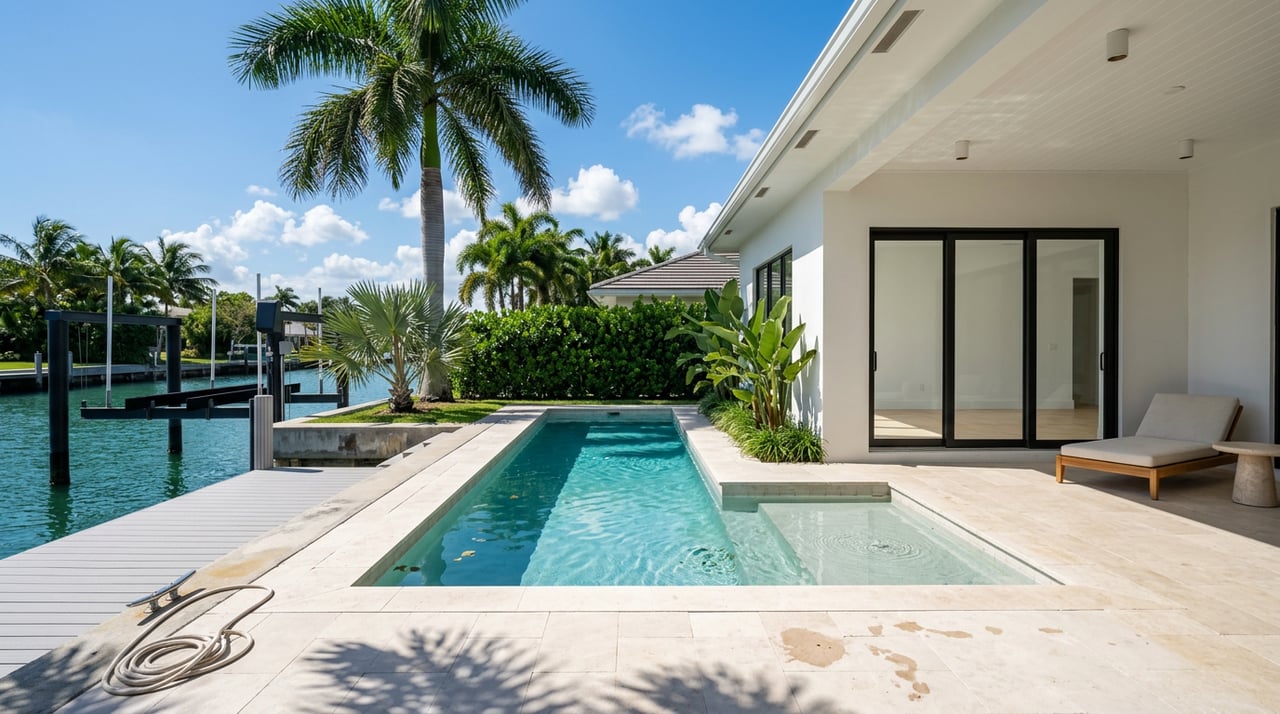
Private dock, boat lift, and pilings
On canal and ICW lots, a private dock is a core amenity. Ask for the dock’s permit history and whether it sits over sovereign submerged lands. For new or modified structures, approvals often run through local agencies, Florida DEP, and in some cases the U.S. Army Corps of Engineers. Review guidance and forms through the Florida DEP’s submerged lands and environmental resource permits page.
Seawall, bulkhead, or revetment
Seawalls protect shorelines from erosion. Their age, condition, and maintenance records matter because replacement is costly and disruptive. Where site conditions allow, naturalized or “living” shoreline approaches may be options. A recent UF/IFAS study shows Floridians’ growing preference for natural shoreline solutions, which you can explore in this UF/IFAS overview on living shorelines.
Elevated first floor and flood-ready design
Many waterfront homes include elevation and flood-mitigation features like flood vents or breakaway walls. Ask for the property’s Elevation Certificate and the seller’s flood insurance history. The Town’s Flood Zones and Insurance information explains map updates and coverage basics that can affect premiums.
Impact windows and hurricane protection
In Florida’s wind-borne debris regions, impact-rated windows, reinforced doors, and code-compliant protections can help reduce storm risk. Confirm whether replacements were permitted and meet the current code at the time of installation.
Coastal-grade materials and upkeep
Salt air is tough on metal, HVAC coils, and exterior hardware. Expect marine-grade finishes, stainless hardware, and more frequent AC service. For a practical maintenance overview, review this coastal HVAC care guide, then discuss property-specific schedules with your inspector.
Insurance, permitting, and risk: what to check
Flood zones and insurance
FEMA maps change over time, and flood zones drive lender requirements and many insurance decisions. Look up the current zone, request the Elevation Certificate, and ask about any recent map changes. The Town of Jupiter provides helpful links on flood zones and insurance. Keep in mind flood policies often have waiting periods, and premiums depend on elevation and mitigation features.
Shoreline work and permits
Docks, seawalls, lifts, and dredging usually require approvals from multiple agencies. A missing or incomplete permit history is a red flag. Ask the seller for copies of approvals, engineering reports, and recent inspections. Use the Florida DEP’s permitting resources to understand common requirements.
Long-term coastal change
Sea-level rise and coastal change are active planning topics for local and state agencies. Avoid assuming permanence for any shoreline. Use flood lookups and speak with your insurance and inspection teams about mitigation strategies that fit the property.
Weekend life on the water
Paddling the Loxahatchee
For a quiet day on the water, paddle cypress-lined bends and watch for wildlife along the Loxahatchee. Start at Riverbend Park, a favorite launch point with rentals and guided tours available nearby.
Ocean and sportfishing
Jupiter’s inlet is a gateway to nearshore and offshore fishing. Many marinas support charters, fuel, and tackle. If you plan to keep a fishing boat at home, confirm your route and bridge clearances with local boater resources before you buy.
Beach days and surf culture
Public beach parks and reef areas near the inlet attract swimmers and surfers. If you prefer sand underfoot and sunrise views, oceanfront and inlet-front properties deliver the classic Jupiter beach lifestyle.
A short due diligence checklist
Use this quick list to keep your purchase on track:
- Confirm the property’s flood zone, request the Elevation Certificate, and review the Town’s flood and insurance guidance.
- Verify boat access for your vessel. Check bridge clearances and channel notes in the Jupiter Inlet District boater’s guide.
- Review permit history for docks, lifts, and seawalls with the seller, then cross-check with the Florida DEP’s permitting resources.
- Inspect the seawall, dock structure, and pilings. Ask for recent inspection reports and repair invoices.
- Evaluate wind and flood mitigation features. Confirm permits for window and door replacements.
- Discuss coastal maintenance needs, including AC service, exterior metals, and finishes. A coastal HVAC care guide is a helpful starting point.
- If you need a slip, call marinas like JIB Marina to confirm current availability and waitlists.
When you are ready to tour, The Luxury Palms Group guides you through shoreline selection, boat access planning, and property due diligence with a concierge approach. If you are selling, we coordinate staging, pre-sale updates, and premium marketing so your home stands out.
Ready to find your fit on the water or value your waterfront property? Connect with Stephanie Muzzillo to request a complimentary home valuation or schedule a private consultation.
FAQs
What is the difference between oceanfront and riverfront in Jupiter?
- Oceanfront and inlet-front homes offer direct beach access and open views, with more exposure to waves and salt. Riverfront living on the Loxahatchee’s protected waterway is calmer and shaded, with great paddling. Always check flood zones and permits.
What does “no fixed bridge” mean for boating in Jupiter?
- It means your route to the ocean does not pass under bridges with fixed heights, which is important for taller vessels. Still verify vertical clearances and charted depths using local boater guides before you buy.
Can I build or repair a dock on a waterfront home?
- Not without approvals. Docks, lifts, seawalls, and dredging typically require local and state authorizations, and sometimes federal review. Start with the Florida DEP’s permitting resources and request the property’s permit history.
Do waterfront homes cost more to insure in Jupiter?
- Flood insurance is separate from homeowners insurance and is often required in Special Flood Hazard Areas. Premiums depend on elevation and mitigation features. Review the Town’s flood and insurance guidance and get quotes early.
Where can I launch a kayak or small boat in Jupiter?
- Start with the Town’s boating ramps guide and explore paddling options from Riverbend Park. You can also review Town resources on kayaking spots and safety.