You are not choosing between two waterfronts. You are choosing between two lifestyles, two maintenance paths, and two sets of risk and reward. If you are weighing an oceanfront condo against an Intracoastal single‑family home in Delray Beach, the right answer depends on how you plan to live, use the water, and manage long‑term costs. In this guide, you will learn the price drivers that matter most, how insurance and permitting shape value, and what to check before you make an offer. Let’s dive in.
Oceanfront condos: where premiums come from
Oceanfront in Delray Beach is mostly condo living, often with direct beach access, staffed buildings, and resort‑style amenities. You pay a premium for unobstructed Atlantic views, convenience, and shared maintenance handled through the association. That premium shifts with view quality, building reputation, and carrying costs.
View and orientation matter most
- Unobstructed, east‑facing ocean views command top per‑square‑foot pricing.
- Higher floors can earn additional premiums for wider horizons and reduced street noise.
- Corner layouts and wider glass lines raise value when they expand the view corridor.
Building, amenities and reserves
- Strong amenity packages, beachfront access, and on‑site services support higher prices.
- Association health matters. Budget strength, reserves, and special assessment risk influence both buyer demand and appraisals.
- For valuation, appraisers compare against similar oceanfront buildings, adjusting for floor, view, amenities, and reserves.
Insurance and carrying costs
- Oceanfront buildings often sit in coastal high‑hazard or A‑zone flood areas. You can review maps on the FEMA Flood Map Service Center.
- HOA fees typically cover exterior maintenance and master insurance, while unit owners carry interior coverage and flood if required. Premium levels depend on elevation and building details.
- Florida’s coastal insurance market is evolving. For current carrier trends and approvals, check Florida Office of Insurance Regulation market updates and supplemental options via Citizens Property Insurance resources.
Coastal rules and permits
- Projects seaward of the Coastal Construction Control Line require state review. Get familiar with Florida DEP Coastal Construction Control Line guidance before planning renovations.
- For long‑term shoreline stability, monitor county and federal beach projects through the U.S. Army Corps of Engineers coastal projects in Palm Beach County.
Intracoastal single‑family: what drives value
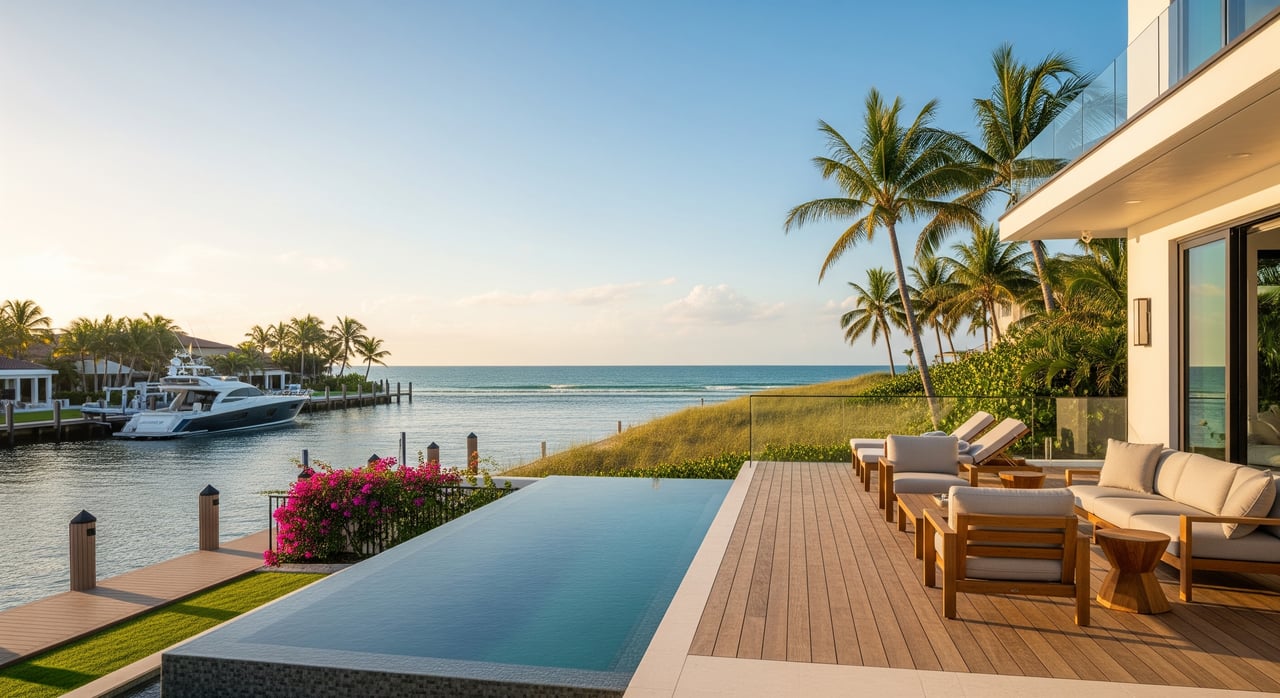
Intracoastal homes in Delray often include private docks, larger lots, and outdoor living that extends to the water. Prices track dock quality, depth, lineal waterfront, and view corridors, along with the home’s overall condition.
Dockage, depth and navigability
- Private dock access and deeper water raise value for boaters. Depth at mean low water and permitted lift capacity matter.
- Lineal feet of waterfront is a scarce metric and influences price, especially on wider channels with long views.
- Bridge clearances and marina traffic can shape both usability and perceived value.
Lot, outdoor space and views
- Larger lots with room for a pool, outdoor kitchen, and seating areas support higher demand.
- Wide Intracoastal views, minimal obstructions, and thoughtful landscape design strengthen resale appeal.
Seawall and structural condition
- Seawall age, material, and tie‑back condition affect both safety and price. Replacement or tie‑back upgrades can be significant capital items.
- Docks, pilings, and lifts should be reviewed for permits and maintenance history. County and state permits are often required for work in navigable waters. Start with Palm Beach County Environmental Resources Management permitting.
Insurance and ongoing costs
- Single‑family owners carry their own flood, wind, and homeowners policies. Flood zone and elevation drive premiums.
- Maintenance is individualized: seawall, dock, landscaping, stormproofing, and systems upkeep.
Risk and permitting: ocean vs Intracoastal
Both waterfront types live with water risk, but the exposures differ. Understanding maps, elevations, and agencies can help you price risk accurately and negotiate with confidence.
Flood zones and elevation
- Oceanfront parcels often sit in VE or AE zones, where Base Flood Elevations can be higher. Many Intracoastal parcels are AE, though some inland canals may vary.
- Always request the elevation certificate. Flood insurance costs are tied to finished‑floor height relative to the base flood elevation. Review maps on the FEMA Flood Map Service Center.
- For long‑term planning, explore regional projections on the NOAA Sea Level Rise Viewer. These projections inform lender and investor risk models over multi‑decade horizons.
Permitting pathways
- Oceanfront projects near or seaward of the CCCL go through the Florida Department of Environmental Protection. See Florida DEP CCCL guidance.
- Docks, lifts, and seawalls may need county approvals and sometimes federal permits. Start with Palm Beach County Environmental Resources Management and confirm whether a U.S. Army Corps of Engineers authorization applies.
- When evaluating a listing, ask the seller or agent for copies of prior permits, inspection reports, and any enforcement notices.
Costs and investment math
You want a clear picture of monthly and lifetime costs. That means mapping HOA fees, insurance, and capital items against your expected hold period and rental plans.
Oceanfront condo vs single‑family costs
- Oceanfront condos centralize many expenses in the HOA. Review budgets, reserve studies, and meeting minutes for special assessment risk.
- Intracoastal homes carry individualized expenses: seawall and dock work, roof and exterior systems, landscaping, and flood mitigation.
- For both types, plan for capital items like roof or piling repairs, dock reconstruction, or seawall tie‑backs.
Insurance realities in coastal Florida
- Premiums and carrier availability change. Track updates from the Florida Office of Insurance Regulation. If private carriers are limited, explore Citizens Property Insurance as a potential option.
- Insurance cost and availability can influence lender terms, buyer demand, and sale valuations.
Rental and use rules
- Short‑term rental policies vary by city and by condo association. In Delray, verify local ordinances and building bylaws before underwriting rent potential.
- Oceanfront condos often appeal to vacationers and seasonal stays, subject to building rules. Intracoastal homes may perform well with seasonal or longer‑term leases.
Taxes and possible assessments
- Florida homestead rules apply to primary residences. Confirm your eligibility with your property tax advisor.
- Oceanfront areas can be subject to special assessments tied to shoreline or infrastructure projects. Stay informed through county notices and U.S. Army Corps of Engineers coastal project updates.
Valuation and negotiation insights
Appraisals and negotiations hinge on selecting the right comparables and documenting costs and risks. Precise due diligence strengthens your position.
Comparable selection
- Compare oceanfront condos to similar oceanfront condos with like‑kind buildings, floor levels, view quality, and amenities.
- Compare Intracoastal homes by dock quality, lineal feet, water depth, setbacks, elevation, and seawall condition.
- For both, adjust for pool, outdoor improvements, lot size, HOA obligations, and recent renovations.
Due diligence checklist
Ask for or verify the following before you finalize terms:
- Flood zone and most recent elevation certificate (check against the FEMA Flood Map Service Center)
- Seawall age, materials, last repair, tie‑back condition, and any inspection reports
- Dock and lift permit history, depth at mean low water, lift capacity, and piling condition
- HOA or condo documents, reserve study, annual budget, and recent minutes
- Current insurance premiums and carrier details for flood and wind, plus prior claims history
- Copies of county, DEP, and, if applicable, U.S. Army Corps permits or correspondence
- For property history and recorded data, search the Palm Beach County Property Appraiser
Smart negotiation levers
- Buyers can price in seawall or dock remediation, insurance premiums, and known assessments.
- For Intracoastal homes, limited dock depth or unpermitted improvements reduce value.
- For oceanfront condos, blocked or partial views, lower floors, or weak reserves are leverage points.
- Sellers can strengthen position with updated elevation certificates, recent inspections, and complete documentation.
Which waterfront fits your goals
Choose oceanfront if you prioritize daily beach access, turnkey services, and panoramic views with HOA‑managed maintenance. Choose Intracoastal if you value private dockage, larger outdoor spaces, and direct water use for boating and paddle sports. If you split time in Florida and plan to rent seasonally, align your plan with local rules and building policies before underwriting income.
If you want help mapping the lifestyle to the financials, connect with a local team that can pair comps, insurance insights, and vendor support so you can move with confidence.
Ready to compare properties side by side, review permits, and get clear on insurance and long‑term costs? Request your personalized plan and market analysis today with Unknown Company.
FAQs
What drives oceanfront condo premiums in Delray Beach?
- View quality, floor height, building amenities, and association health are the main drivers. Unobstructed east‑facing views and strong reserves support higher pricing.
How does private dockage affect Intracoastal home values?
- Dockage is a major factor for boaters. Permitted docks with deeper water, solid pilings, and lift capacity tend to command higher prices, along with wide view corridors.
Where can I verify flood zones and elevation for a property?
- Use the FEMA Flood Map Service Center and request the seller’s elevation certificate to understand flood risk and potential insurance costs.
Which has higher carrying costs, oceanfront or Intracoastal?
- It depends. Oceanfront condos shift exterior costs to the HOA but may face higher HOA fees and assessment risk. Intracoastal homes carry individual costs for seawalls, docks, and landscaping.
How do coastal regulations impact renovations and new work?
- Oceanfront projects near the CCCL require state review by the Florida DEP. Docks and seawalls often need county permits and sometimes federal authorization. Start with Palm Beach County ERM and Florida DEP CCCL guidance.
Is insurance harder to secure for waterfront homes in Florida?
- Availability and premiums vary by location, elevation, and construction. Monitor Florida Office of Insurance Regulation updates and consider options through Citizens Property Insurance if private carriers are limited.